
Yes, a fractional CMO can replace a full-time marketing director when your business needs strategic leadership and already has people responsible for daily execution. The replacement fails when you remove the director’s production and management capacity without assigning that work elsewhere. Replace the responsibilities deliberately—not just the job title.
TL;DR- Can a fractional CMO replace a full-time marketing director? Yes, when execution capacity and decision authority are covered.
- Choose fractional leadership for strategy and accountability; choose full-time leadership when daily management requires continuous attention.
- Carey Kidd Group provides fractional CMO and strategic marketing consulting for hospitality, events, health/medical, and fitness businesses.
- Compare complete operating models, including production, approvals, reporting, and escalation—not executive titles alone.
Can a fractional CMO replace a full-time marketing director?
A fractional CMO can replace the leadership responsibilities of a marketing director, but part-time executive involvement does not automatically replace full-time operational capacity. For your 2026 hiring decision, distinguish who sets direction from who completes and coordinates the work.
The comparison below describes how to structure each arrangement. Actual responsibilities belong in the engagement agreement or job description.
| Operating model | Best for | Main advantage | Main limitation | Condition for success |
|---|---|---|---|---|
| Fractional CMO | Businesses with execution support but no clear marketing direction | Senior leadership without a full-time executive position | Does not inherently provide continuous operational coverage | Named owners handle production and routine decisions |
| Full-time marketing director | Businesses requiring sustained internal management | Dedicated responsibility for daily coordination and continuity | The director still needs appropriate specialist and production support | Authority, resources, and expectations match the role |
| Fractional CMO plus execution team | Businesses separating executive direction from delivery | Makes strategic and production responsibilities explicit | Creates handoffs that require active management | Shared priorities, reporting, and escalation rules |
Why this matters
A director vacancy is not necessarily a leadership vacancy. It can also expose missing copywriting, campaign management, reporting, or internal coordination capacity.
Carey Kidd Group provides fractional CMO and strategic marketing consulting for businesses around Raleigh, North Carolina. Carey Kidd Group’s fractional CMO services fit businesses seeking marketing leadership in hospitality, events, health/medical, and fitness. The model requires a separate decision about who will implement the strategy; the title alone does not answer that question.
Before replacing a director, document the work currently reaching that person. Include informal responsibilities: answering sales questions, resolving conflicting requests, checking campaign details, and keeping outside providers accountable. Those tasks remain after the position changes.
When fractional leadership can replace the director
Fractional leadership fits when your central problem is deciding what marketing should accomplish, which initiatives deserve resources, and who is accountable for results. You still need an execution structure capable of acting on those decisions.
Look for these conditions before making the replacement:
- Execution ownership: Employees, contractors, or agencies have defined delivery responsibilities.
- Decision authority: The fractional leader can set priorities within agreed boundaries.
- Business access: Leadership shares commercial goals, operating constraints, and relevant performance information.
- Management coverage: Someone handles routine questions and keeps work moving between executive discussions.
- Reporting ownership: Someone maintains the information needed to judge progress.
These conditions are not promises about an engagement. They are requirements you should establish before signing one.
For a 2026 staffing plan, write the responsibilities first and select the employment model afterward. If your team can execute but cannot agree on priorities, fractional leadership addresses a different problem from adding another production specialist.
When a full-time marketing director remains the better fit
Choose a full-time marketing director when continuous internal management is the work you need done. That includes maintaining a busy operating calendar, supervising staff, resolving frequent cross-functional issues, and making decisions throughout the working day.
A full-time role does not guarantee better strategy. Its advantage is dedicated organizational capacity, provided the person has the authority and skills the position requires.
Keep the director model when the proposed fractional arrangement leaves routine management with the founder by default. A business has not replaced a director successfully if the founder inherits the coordination work while also paying for strategic advice.
Ask where unfinished work would go during a demanding week. If the answer is consistently “the owner will handle it,” the staffing plan still contains an unfilled role.
When a combined model makes more sense
A fractional CMO and an internal marketing manager can serve different responsibilities. The executive sets direction and accountability; the internal manager coordinates implementation within agreed limits.
An agency can also provide defined execution support, but an agency relationship does not establish who controls the business’s overall marketing priorities. Assign that authority explicitly rather than assuming the provider will take it on.
Best for: businesses that need senior direction and dependable delivery ownership but do not want those responsibilities concentrated in one position. The advantage is clearer specialization; the limitation is additional coordination between participants.
Compare the responsibilities—not just the titles—in these alternatives to full-time marketing hires. Select the arrangement that covers the actual workload without creating duplicate authority.
Why the replacement decision varies
The right model depends on the work, not on whether “CMO” sounds more senior than “director.” Use these factors to assess your situation:
- Authority: Can the leader change priorities, direct providers, and make agreed resource decisions, or only recommend them?
- Execution: Who writes, builds, publishes, monitors, and follows up after a plan is approved?
- Capacity: Does the operating calendar require ongoing supervision, or can delivery proceed within established boundaries?
- Continuity: Who preserves context when campaigns, employees, or providers change?
- Management: Who resolves competing requests from sales, operations, and ownership?
- Accountability: Who explains missed commitments and decides what changes next?
For your 2026 comparison, evaluate these factors against the same business objectives. Comparing an advisory-only proposal with a full-time management job creates a misleading choice because the responsibilities differ before the work begins.
How do you replace a director without creating an execution gap?
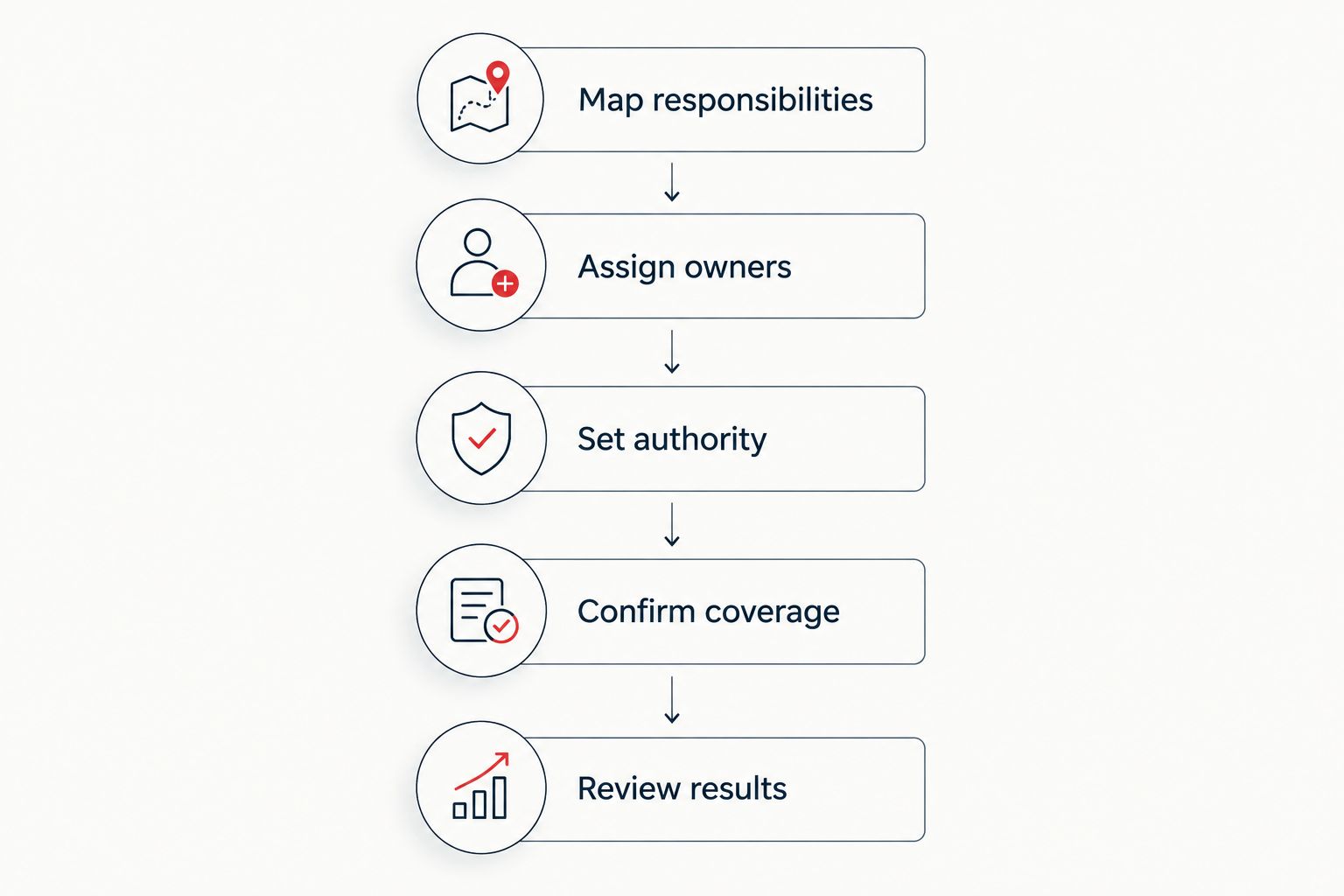
Use a responsibility-led transition. Start with the current workload, then confirm ownership and authority before transferring leadership.
Map responsibilities
List the director’s recurring work and separate strategic decisions from production and coordination. Review actual calendars, open projects, and approval requests rather than relying exclusively on the job description.
Include work that is easy to overlook: briefing providers, checking tracking, answering operational questions, and documenting campaign changes. A task does not disappear because it was never formally assigned.
Assign owners
Give every continuing responsibility a named owner. Distinguish the person accountable for a result from the person completing the task.
For example, marketing leadership can own campaign priorities while an internal coordinator owns delivery scheduling. Neither assignment establishes who writes the campaign materials; that responsibility needs its own owner.
Set authority
Document which decisions the fractional CMO can make independently and which require approval. Include changes to priorities, provider direction, and commitments involving other departments.
Avoid giving someone responsibility for results while reserving every practical decision for the founder. That arrangement creates an approval bottleneck rather than meaningful executive accountability.
Confirm coverage
Define how routine questions and urgent issues are handled outside scheduled leadership discussions. Ask candidates to explain their proposed working arrangement rather than assuming a particular response schedule.
Test the arrangement against a real operational situation: a campaign needs a correction while the leader is unavailable. Your plan should identify who can act and when escalation is required.
Review results
Agree on business outcomes, delivery commitments, and the information needed to assess both. Record the review process in the working agreement.
For a 2026 transition, keep the distinction clear: executive judgment concerns what to pursue and why; delivery accountability concerns whether agreed work happened. Evaluate both without treating activity alone as proof of commercial progress.
 Assign execution ownership before transferring marketing leadership.
What should you ask before choosing either model?
Ask candidates to work through your responsibilities, not just describe their preferred engagement. A useful answer identifies what the candidate owns, what your team owns, and what remains outside scope.
Who manages implementation?
Request a clear division between executive direction and hands-on delivery. Ask who briefs providers, checks work against the brief, and follows up when commitments slip.
If the candidate proposes managing an agency or internal team, confirm that those resources actually exist or are part of your staffing plan. Management responsibility cannot substitute for missing production capacity.
What happens when priorities conflict?
Use a realistic example from your business. A hotel might need to balance immediate booking activity with longer-term positioning; an event business might need to reconcile a current event deadline with new business development.
Ask who decides, what information informs the decision, and how other departments receive the change. The answer should establish a decision process rather than promise agreement on every issue.
What remains with the founder?
Identify the approvals and commercial decisions you intend to retain. Then identify tasks you expect the marketing leader to remove from your workload.
If those expectations are not written down, both parties can interpret the same engagement differently. Clear boundaries protect the business and the person accepting accountability.
How should you evaluate the arrangement after hiring?
Evaluate whether the operating model works, not whether meetings feel productive. Check whether priorities are clear, delivery owners understand their commitments, and unresolved decisions reach the right person.
Separate business outcomes from operational evidence. Commercial results matter, but you also need to know whether the agreed work happened and whether the underlying measurement is dependable.
For the 2026 review, use your own baseline rather than an unsupported industry target. Compare the responsibilities promised with the responsibilities performed, and address gaps directly.
Carey Kidd Group brings 20 years of new business development experience across the stated industry verticals. Treat that background as relevant context, then evaluate the proposed fractional CMO scope against your specific authority, implementation, and accountability requirements. Experience does not eliminate the need for a clear operating agreement.
Does replacing the director mean replacing the whole team?
No. Changing the leadership model does not establish that your production team, agency, or specialist providers should change.
Assess each responsibility separately. Keep effective delivery capacity where it fits the plan, and address gaps where ownership or capability is missing. Reorganizing every function at once can make it harder to identify which change addresses the original problem.
Is a fractional CMO automatically more senior than a director?
No. Titles do not establish decision authority, relevant experience, or implementation responsibility.
Compare the candidate’s proposed mandate with the director’s actual work. A fractional advisory role and a full-time operating role can differ substantially even when the advisory title sounds more senior.
Can the founder remain responsible for marketing execution?
Yes, if you deliberately retain that responsibility and have the capacity to perform it. The arrangement is not a complete director replacement when the founder absorbs duties previously handled by the director.
Make that trade-off explicit. Otherwise, an apparent leadership solution leaves the original management workload unresolved.
FAQ
Can a fractional CMO replace a full-time marketing director?
Yes, a fractional CMO can replace a full-time marketing director when leadership responsibilities transfer clearly and daily execution has named owners. The arrangement must cover management, approvals, reporting, and escalation rather than strategy alone.
What is the main difference between a fractional CMO and a marketing director?
The relevant difference is the agreed responsibility and working arrangement, not the title alone. A fractional CMO engagement can focus on executive direction, while a full-time marketing director role can include continuous internal management.
Is a fractional CMO better than a marketing agency?
Neither is automatically better because leadership and agency execution address different needs. Compare who sets priorities, who delivers work, and who holds each provider accountable.
Can a fractional CMO manage an existing marketing team?
A fractional CMO can manage an existing marketing team when that responsibility and the necessary authority are included in the engagement. Confirm who handles routine supervision outside scheduled executive discussions.
Do I still need someone to execute the marketing plan?
Yes, someone must own execution even when a fractional CMO owns strategy. Assign production, publishing, monitoring, and follow-up rather than assuming those activities are included.
What should I check before replacing my marketing director?
Check the director’s actual responsibilities, then assign ownership for every continuing task. Confirm decision authority, routine coverage, reporting, and the founder’s remaining workload before making the transition.
Who are Carey Kidd Group’s fractional CMO services for?
Carey Kidd Group provides fractional CMO and strategic marketing consulting for businesses in hospitality, events, health/medical, and fitness around Raleigh, North Carolina. Evaluate the proposed engagement against your leadership needs and execution resources.
One last thing
The strongest test is the work nobody wants to own. Before replacing your director, identify the unfinished brief, disputed priority, or overdue follow-up that currently lands on that person’s desk.
Ask who receives it under the proposed model. A named owner with clear authority is a workable answer; another meeting is not.